Men's Health: The Checks That Matter and Why Acting Early Pays Off
Men often see a doctor later than they should. We cover the key areas of men's health, from heart and prostate to hormones and mental wellbeing, and why acting early can make such a difference.
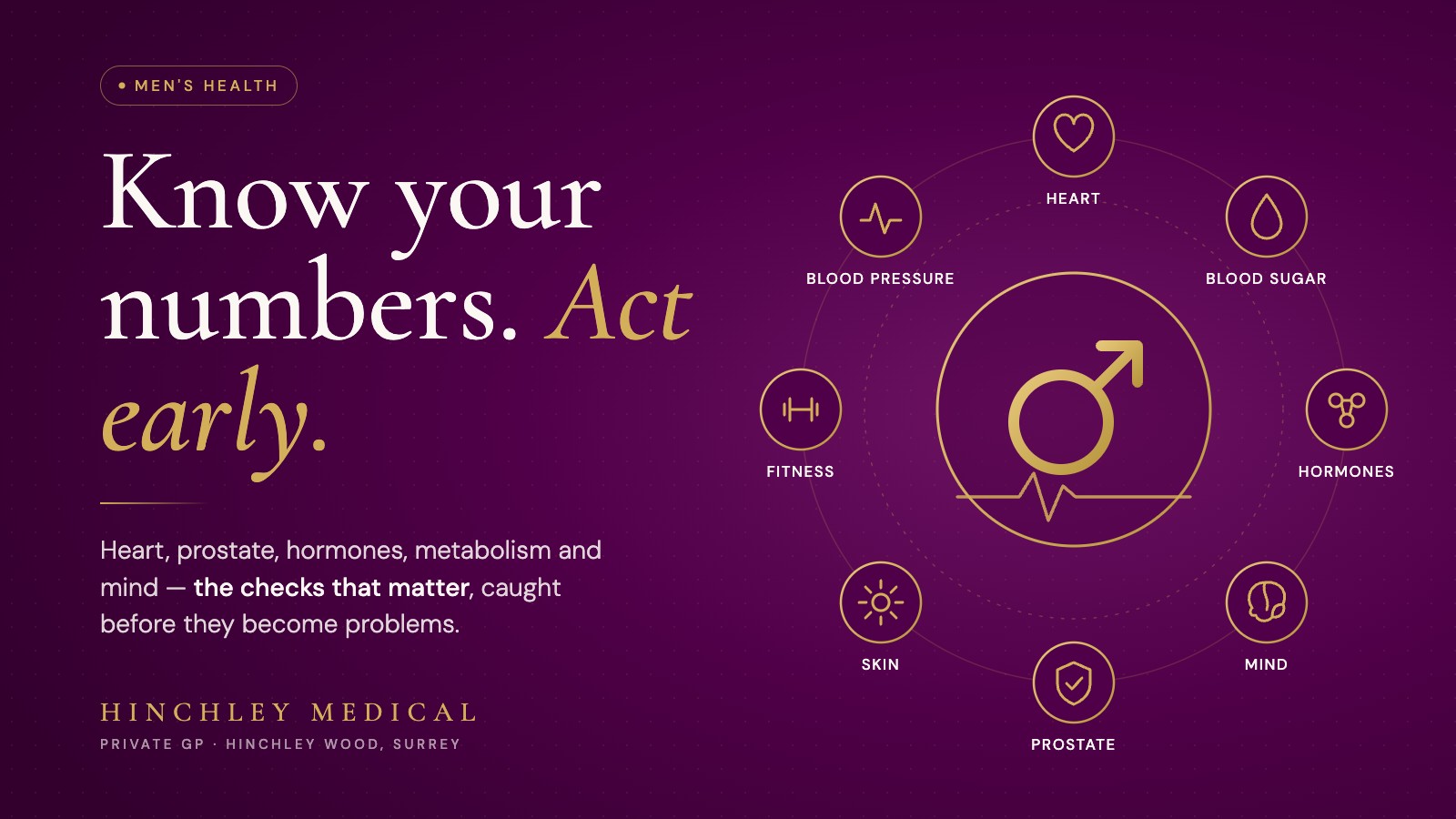
31st October 2026 by Dr Alireza Salehzadeh
Men's health: the conversations worth having early
Many men are very good at looking after their cars, their careers and their families, and far less good at looking after themselves. Men are less likely than women to visit a doctor and more likely to wait until a problem is hard to ignore. In the UK, men still live around four years less than women on average, and much of that gap comes from conditions that can often be identified and managed earlier.
With Movember starting tomorrow, it is a good moment to take stock. In this post we look at the key areas of men's health we assess at Hinchley Medical, why each one matters, and how a little attention now can make a real difference later.
Most of the conditions that shorten men's lives give quiet warnings long before they cause harm. The aim is simply to hear them early.
The key areas of men's health
Heart and circulation
Heart disease remains one of the leading causes of death in UK men, and men tend to develop it earlier than women. High blood pressure and raised cholesterol rarely cause symptoms, so measuring them is the only way to know. We check blood pressure, cholesterol and blood sugar, perform an ECG where appropriate, and calculate your 10-year cardiovascular risk so that any changes are targeted rather than guesswork.
Diabetes, weight and metabolic health
Weight gained around the middle in midlife is closely linked to type 2 diabetes, fatty liver disease and high blood pressure. Pre-diabetes can often be reversed with early lifestyle changes. An HbA1c blood test, liver function tests and a waist measurement give a clear picture of where you stand.
Prostate health
Prostate cancer is the most common cancer in men in the UK. Benign enlargement of the prostate is also very common after 50 and can cause a weak flow, urgency or getting up at night to pass urine. We discuss urinary symptoms, examine where appropriate, and talk through the benefits and limitations of the PSA blood test so that you can make an informed decision about testing.
Testicular health
Testicular cancer is most common in younger men, roughly between 15 and 49, and is usually very treatable when found early. Knowing what is normal for you, and having any lump, swelling or heaviness checked promptly, is what matters most. We can examine and, where needed, arrange an ultrasound scan.
Hormones and energy
Persistent tiredness, low mood, reduced libido or loss of muscle strength are often put down to age or stress. Sometimes that is all it is, but these symptoms can also reflect low testosterone, thyroid problems, anaemia, low vitamin D or poor sleep. A correctly timed blood panel and a careful consultation help to separate these causes and point towards the right next steps.
Sexual health and erectile function
Erectile difficulties are common and nothing to be embarrassed about. They are also clinically important: the small blood vessels involved can be affected by circulatory problems before the heart is, so erectile dysfunction can be an early signal of cardiovascular disease or diabetes. A confidential consultation looks at the whole picture, not just the symptom.
Mental health and wellbeing
Around three quarters of suicides in the UK are men, and men are less likely to seek help for stress, anxiety or depression. Low mood in men often shows up differently, as irritability, poor sleep, drinking more or withdrawing from others. A conversation with a GP who has time to listen can be the first step towards feeling better.
Skin checks
Men are more likely than women to die from melanoma, partly because skin cancers on the back and scalp are easy to miss. Using dermoscopy and GP-led dermatology expertise, we can assess any new or changing moles and offer full skin checks.
Bowel health, alcohol and lifestyle
A change in bowel habit, blood in the stool or unexplained weight loss should always be checked. We also look at alcohol, smoking, sleep and activity, the everyday factors that shape long-term health far more than any single test.
Joints, muscles and staying active
Staying active is one of the best things a man can do for his health, so a nagging knee, shoulder or tendon problem matters. Our on-site diagnostic ultrasound and image-guided procedures can help identify the cause and get you moving again.
Why addressing these areas is so worthwhile
- Silent conditions found earlier: high blood pressure, raised cholesterol, pre-diabetes and fatty liver can often be picked up years before they cause harm.
- More options: many conditions, including several cancers, are easier to treat when found at an early stage.
- Small changes, bigger effect: early, targeted changes to diet, activity, alcohol or sleep can make a meaningful difference to long-term risk.
- Feeling better now: addressing tiredness, sleep, mood or sexual health concerns can improve day-to-day life, work and relationships.
- Peace of mind: for many men, a clear result is reassurance well worth having.
- Being there for the people who rely on you: looking after your own health is also looking after your family.
Why choose Hinchley Medical?
- Doctor-led, unhurried appointments: time to discuss your concerns properly with an experienced GP.
- Prompt, flexible access: appointments that fit around work and family life.
- Diagnostics under one roof: blood tests, ECG, diagnostic ultrasound and dermoscopy, so investigations are not delayed.
- Personalised health checks and reports: a clear explanation of your results and a practical plan, not just a list of numbers.
- Continuity of care: a doctor who knows your history and follows things up.
- Discreet and confidential: a comfortable setting to raise the topics men often avoid.
- CQC registered: a regulated private clinic in Hinchley Wood, serving Esher, Cobham, Oxshott, Surbiton, Hampton and the surrounding areas of Surrey and South West London.
Take the first step
You do not need to wait for symptoms to book a check. Whether you have a specific concern or simply want to know where you stand, a men's health consultation or one of our health checks can give you clarity and a plan. Book an appointment online or call us on 020 8398 1688.
This article is for general information and does not replace individual medical advice. If you have urgent symptoms, please contact your GP, NHS 111 or 999 as appropriate.